

When you buy honey from The Honey Company, you are consuming honey harvested only once the bees have fully matured it—meaning the honey is naturally sealed in capped cells within the hive. This capping is the bees’ way of indicating that moisture levels are low (<18%) and the honey is stable. When harvested at this stage and handled carefully, the chances of honey fermentation are naturally minimal.
Honey is one of the few foods known for its long shelf life. Its natural composition—low moisture and high sugar—helps prevent spoilage and keeps it stable over time. Explore our range of raw honey, harvested from capped honeycombs and carefully packed to retain its natural stability. (View Collection →)
However, under certain conditions, honey fermentation can occur. While not very common, understanding the causes of honey fermentation and how it is prevented helps maintain its quality and taste.
What is Honey Fermentation?
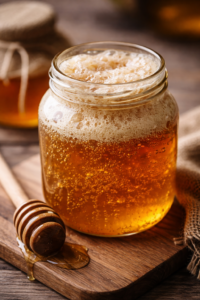 Honey fermentation is a natural process involving the activation of yeast in honey. These yeasts are usually inactive due to honey’s low moisture content.
When moisture in honey increases beyond a certain level, these yeasts begin to break down sugars, leading to fermentation.
Some common signs of beginning of fermentation include:
- A slightly sour smell
- Small bubbles or foam on the surface
- A noticeable change in taste
What Causes Honey Fermentation?
The causes of honey fermentation are fairly specific and usually linked to changes in its natural balance. Moisture in honey is the most important factor. When the water content in honey rises above roughly 18–20%, the environment becomes suitable for yeast activity.
This increase in moisture can happen due to:
- Early harvesting before full maturity
- Exposure to humid air (honey is naturally hygroscopic)
- Absorption of moisture during storage
Temperature also plays a role. Warmer conditions can accelerate the process, especially when moisture levels are already slightly elevated.
Honey Fermentation Prevention
The good news is that honey fermentation prevention doesn’t require anything artificial. Honey remains stable when its natural conditions are maintained.
Low moisture content is key.
Properly matured raw honey typically stays within a safe moisture range.
Storage matters.
Keeping honey in airtight containers reduces exposure to humidity and helps maintain its natural stability.
A stable environment helps.
A cool, dry place is ideal for raw honey storage. Avoiding temperature fluctuations prevents condensation inside the jar.
Clean handling supports shelf life.
Using dry, clean utensils and avoiding contact with water helps preserve honey quality.
Does Fermented Honey Mean It’s Spoiled?
Fermented honey is not typically harmful when it first begins to ferment. The process is natural and occurs due to the activation of yeast already present in honey.
However, fermentation does indicate that the honey’s natural balance has changed. Over time, if fermented honey is stored for longer periods:
- The taste can become increasingly sour or alcoholic
- Texture may turn more bubbly or unstable
- Quality continues to decline
Because fermentation is not a controlled process, extended storage can also increase the chances of further deterioration.
For this reason, while mildly fermented honey is not usually unsafe, it is not considered ideal for regular consumption, especially over time.
Take Away
Honey’s natural stability is what gives it its long shelf life. When moisture in honey remains controlled, fermentation is unlikely to occur.
In most cases, honey fermentation happens only when honey is harvested prematurely or external conditions allow that balance to shift.