

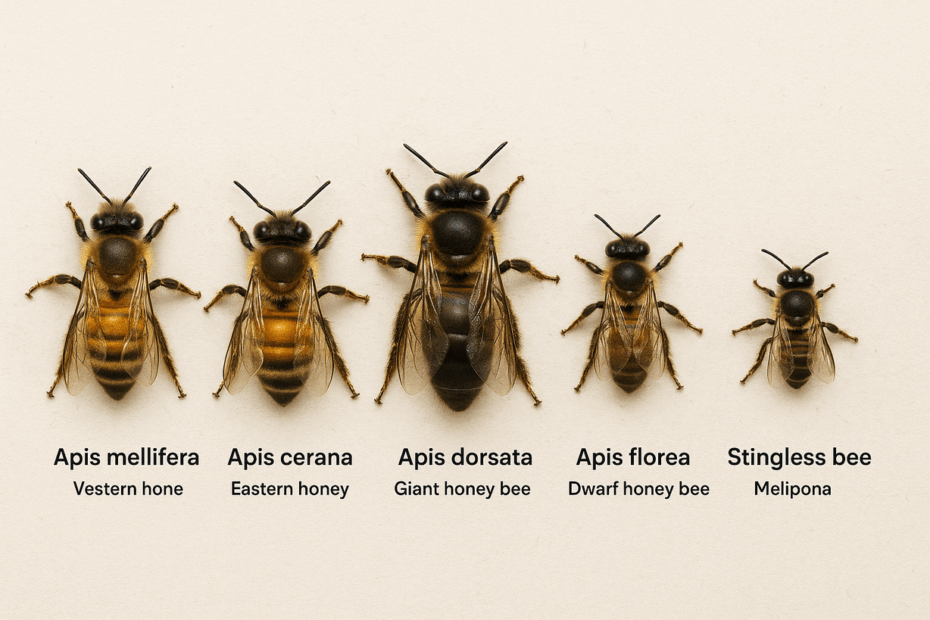
When it comes to honey, most people focus on the flowers or region of origin — but the type of bee influences honey quality just as much. With over 20,000 species of bees found worldwide, only a handful belong to the Apis genus, the true honey makers. Each species produces honey with a distinct taste, color, and health profile.
How Many Honey Bees Are There?
Out of thousands of bee species, only about seven to nine are true honey bees (Apis species). These include:
-
Apis mellifera (Western honey bee)
-
Apis cerana (Eastern honey bee)
-
Apis dorsata (Giant honey bee)
-
Apis florea and Apis andreniformis (Dwarf honey bees)
Other bees, such as stingless bees (Melipona, Tetragonula), also produce honey, but their honey is different — tangier, thinner, and often used in traditional medicine.
How the Type of Bee Influences Honey Quality
Different bees collect nectar from different flowers, process it differently, and store it in distinct ways. These natural variations directly affect flavor, texture, and nutrition.
1. Apis mellifera (Western honey bee):
The most common commercial species, A. mellifera produces high yields of clear, golden honey. It’s mild, floral, and rich in enzymes that help boost immunity.
2. Apis cerana (Eastern honey bee):
Native to Asia, this bee produces smaller batches but more aromatic honey. It’s known for its resistance to pests and its preference for medicinal plants, giving the honey a unique herbal flavor.
3. Apis dorsata (Giant honey bee):
A wild and large species that builds open combs high on trees or cliffs. The honey is rich, bold, and often harvested by traditional honey hunters in India and Southeast Asia.
4. Apis florea & Apis andreniformis (Dwarf honey bees):
Tiny forest bees that produce very small amounts of honey — prized locally but rarely available commercially.
5. Stingless bees:
Their honey has higher moisture and acidity, making it slightly sour but full of antioxidants and phenolic compounds. Studies show it may have stronger antibacterial and healing properties than regular honey.
Health Benefits of Honey from Different Bees
No matter the species, honey offers natural benefits — but their strengths vary slightly:
-
Apis mellifera honey: rich in glucose oxidase, known for wound-healing and soothing coughs.
-
Apis cerana honey: higher in flavonoids and organic acids that support digestion.
-
Stingless bee honey: powerful antioxidants that may protect cells from damage and support gut health.
That’s why understanding how the type of bee influences honey quality helps you choose the best honey for your taste and wellness goals.
Beekeeping in India and the Future of Honey
India is home to several native honey bee species, and sustainable beekeeping plays a vital role in biodiversity and rural livelihoods. Each jar of raw, natural honey reflects not just the flowers, but the unique work of the bees that made it.
Key Takeaway
The next time you enjoy a spoonful of honey, remember — it’s not just about where the nectar came from, but which bee made it. From the golden sweetness of Apis mellifera to the tangy health-packed stingless bee honey, every bee species adds its own story and strength to nature’s golden gift.